
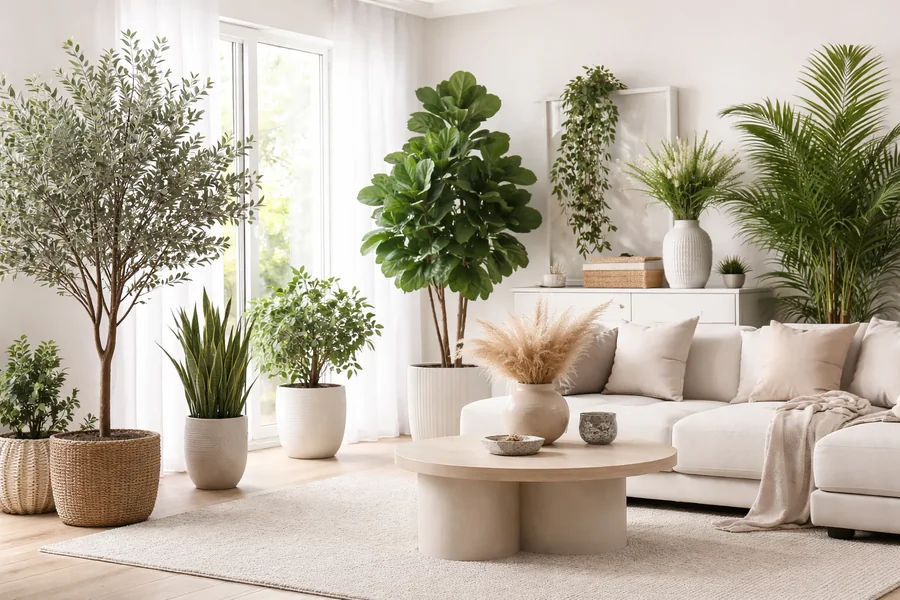
Why Artificial Trees Suit Contemporary Interiors
Modern interior design is characterized by an emphasis on clean lines and practical materials, often balanced by softer organic elements. Artificial willow trees are uniquely suited to this style, introducing a graceful, flowing form without the unpredictability or upkeep of live plants. Their subtle, draping foliage can add life and movement to structured rooms, softening the effect of angular furniture and hard flooring. Because they require no sunlight or watering, artificial trees make it possible to bring biophilic design into any space—from apartments to workplaces and windowless corridors. This flexibility also supports those with allergies or tight schedules, allowing for nature-inspired decor that’s always low-maintenance. Consequently, artificial willow trees fit seamlessly into small homes, commercial offices, and shared living environments where real plants might not thrive.
Creating Focal Points With Height And Flow
Treating an artificial willow tree as a vertical focal point is a striking way to enrich a modern room. In expansive, open-plan living areas, positioning a tall willow next to a lounge chair or sofa helps anchor a specific zone visually, all while maintaining open sightlines. The downward sweep of the branches naturally guides the eye and can be especially effective alongside tall windows or adjacent to statement lighting fixtures. In entry corridors, a slender willow beside a console table provides a welcoming touch that makes narrow spaces feel less stark. Pairing willows to frame fireplaces or large artworks is another popular method, emphasizing architectural features while keeping the arrangement flexible. Since the branches can be shaped around obstacles, the overall look remains intentional yet relaxed, rather than feeling cluttered or crowded.
Styling Bases, Planters, And Layered Textures
A thoughtfully chosen base or planter significantly enhances how an artificial tree complements modern decor. Sleek, minimalist pots in concrete or matte black suit industrial and Scandinavian schemes, while woven baskets or ceramic containers can create a softer, organic vibe. To reinforce realism, decorators often arrange decorative stones, preserved moss, or wood chips around the base, echoing natural materials found elsewhere in the room. Selecting the planter’s finish to coordinate with existing touches—like metal hardware or wooden side tables—allows the tree to blend harmoniously instead of appearing isolated. For inspiration and variety, homeowners can explore a dedicated selection of artificial willow tree options to find just the right scale, trunk texture, and style for their space. These thoughtful finishing touches are what ensure the tree truly feels like a part of the home’s design language.
Room-By-Room Ideas For Artificial Willow Trees
Artificial willow trees lend themselves to many creative uses from room to room. In living rooms, a tall willow can fill an empty corner behind a reading chair, while a petite version on a shelf or sideboard brings gentle greenery to eye level. Bedrooms benefit from tranquil, cascading foliage placed near a window seat or beside a dresser for a soothing effect. In dining rooms, a medium-height tree at the end of a buffet or between artwork bridges the gap between furniture and vertical space without overwhelming the scene. For home offices, willows are an excellent way to break up plain walls and create a visually interesting but non-distracting backdrop for calls or video meetings. Even bathrooms can enjoy the lush look of a willow tree, introducing a spa-like feel immune to changes in moisture.
- Use tall willows to define separate zones within open layouts, replacing heavy partitions with natural movement.
- Add small trees to shelves or side tables for a subtle touch of green at standing or seated height.
- Mix and match willow heights to evoke the layered look of a garden, even in compact interiors.
Combining Lighting And Seasonal Styling
Lighting accentuates artificial plants in ways that can dramatically change the mood of a room. Placing a willow tree near a source of indirect natural light enhances the realism of its leaves and creates gentle, shifting shadows. Soft evening lighting, such as floor lamps or wall sconces, helps illuminate the willow’s shape, giving off a warm, inviting atmosphere. For added drama during special occasions, designers sometimes weave unobtrusive, warm-hued fairy lights through the branches. Subtle seasonal accents—like a ribbon, ornament, or spray of dried foliage—can freshen the tree’s appearance without permanent changes. Artificial willows are durable, so branches can be repositioned as needed to accommodate decor updates, allowing the tree to adapt as your tastes evolve throughout the year.
- Layer ambient and task lighting to accent the tree’s outline, rather than shining direct beams onto it.
- Refresh the tree’s look with temporary decorative details that won’t damage the structure or finish.