
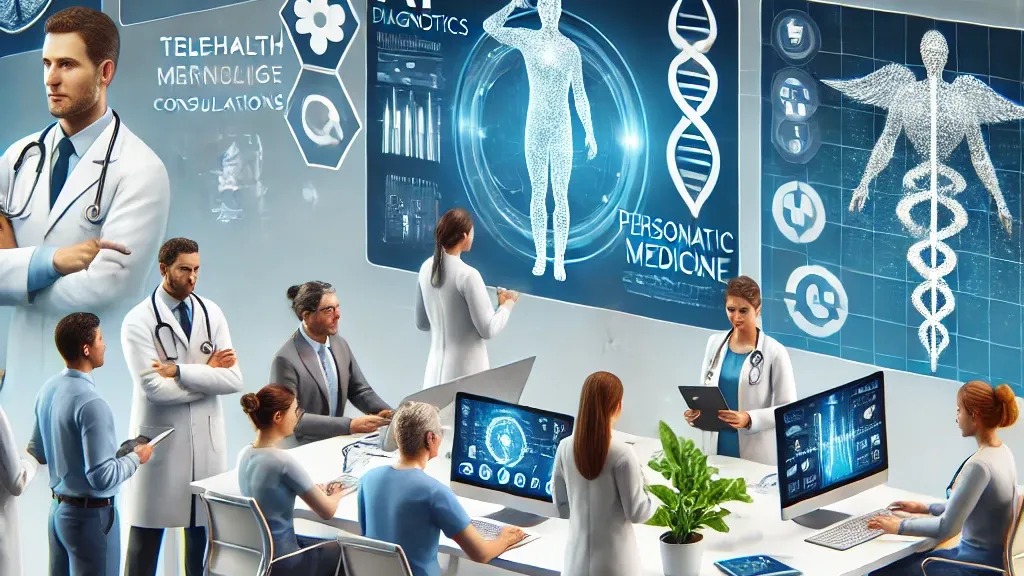
The healthcare sector is on the cusp of the technological revolution, as new technologies have the potential of transforming patient care in the significantly positive way. Telemedicine and artificial intelligence (AI), wearable technologies and blockchain are just a few examples of how technology is transforming care delivery, so that it is more efficient, accessible and individualized. This article focuses on how technology is transforming patient care, the trends leading the pack and how patient care is evolving in the future.
Telemedicine: Revolutionizing Access to Care
The most evident technological revolution in the field of healthcare is the telemedicine that ensures the patients can communicate with healthcare professionals over distance via video, phone conversations, or even whether messaging. Telemedicine has brought healthcare to people serving underprivileged populations in the rural areas and residents who do not have to travel long distances, and wait times have been cut.
The COVID-19 pandemic boosted the shift towards telemedicine as patients and doctors resorted to telemedicine visits in order to adhere to social distancing. Nevertheless, the telemedicine is not going away, even with the pandemic retreating. It is estimated that the global telemedicine market would be worth more than 185 billion by the year 2025.
There are a number of advantages associated with telemedicine.
Enhanced geographical accessibility: geographical barriers are removed, so patients can visit the specialists without scrambling to find a solution.
Cost and convenience: Patients no longer require taking leaves off work or travelling long distances to make an appointment. This may lead to the decrease in the costs of healthcare involved, both on the patient and the provider sides.
Frequent contact: Telemedicine has made it easier to have more frequent interactions with healthcare professionals, thus ensuring most chronic conditions are diagnosed and managed in time.
Although telemedicine has several benefits, it is associated with some setbacks including regulatory barriers, reimbursement, and quality of care in online consultations. Telemedicine will continue to play a bigger role in patient care, as technology betters and healthcare systems change.
Artificial Intelligence: Enhancing Diagnostics and Treatment
AI is also a game-changing technology in healthcare. Based on large amounts of data, AI-based programs enable doctors to make diagnosis more rapidly and accurately, with better treatment choices and even patient outcomes.
Medical imaging is one of the most important areas of healthcare benefiting with regard to AI. AI can interpret medical scans faster and more easily than man in medical scans, like MRIs and CT scans. Some examples include the identification of early-stage cancer, fractures and heart conditions by AI systems, which could reveal anomalies that are not perceived by human eyes. This not only makes the diagnostic process faster but also makes the accuracy of diagnoses higher, resulting in improved patient outcome as well.
Besides, AI is being utilized in the creation of personalized medicine. By studying the genetic analysis of a patient combined with his or her health history, AI should provide a doctor with a means to customize treatment to best fit an individual, resulting in the most ideal outcome. This is a very apt strategy when dealing with more complex diseases like cancer where genetic variations are instrumental in the expression of the disease and response to therapeutics.
There is also IU in predictive analytics, whereby, an algorithm is used to study substantial information in order to forecast patient health trends. As an example, AI may be used to recognize the people who are acutely vulnerable to such a disease as diabetes or heart conditions, so that earlier intervention may occur and, consequently, save some money in healthcare costs.
Wearable Health Devices: Empowering Patients
In recent years, wearable health devices like fitness trackers, smartwatches, and health monitoring sensors have become more popular. These devices track a variety of health metrics, including heart rate, blood oxygen levels, sleep patterns, and physical activity, providing users with real-time insights into their health status.
The integration of these devices with healthcare systems has transformed the way patients and doctors monitor chronic conditions like diabetes, hypertension, and obesity. For example, a wearable device that tracks blood glucose levels can alert a diabetic patient when their levels are dangerously high or low, prompting immediate action and potentially preventing a medical emergency.
Beyond chronic disease management, wearables are increasingly being used for preventative care. For instance, smartwatches like the Apple Watch now feature an electrocardiogram (ECG) function, which can detect irregular heart rhythms and alert users to potential signs of atrial fibrillation. Early detection can lead to timely intervention, reducing the risk of complications such as stroke.
As wearables become more advanced, they are likely to provide even more detailed data, potentially even diagnosing conditions before they become symptomatic. This will empower patients to take control of their health, promoting self-management and preventative care.
Blockchain Technology: Ensuring Data Security
As healthcare data becomes increasingly digital, ensuring its security and privacy is of paramount importance. The healthcare industry deals with a significant amount of sensitive data, including personal health records, medical histories, and insurance information. Blockchain technology, which is best known for underpinning cryptocurrencies, is emerging as a solution to the challenges of data security in healthcare.
Blockchain is a decentralized digital ledger that records transactions in a way that makes it nearly impossible to alter or hack the data. In healthcare, blockchain can be used to securely store electronic health records (EHRs), allowing patients to control their data while making it accessible to authorized healthcare providers.
The use of blockchain in healthcare offers several advantages:
- Enhanced data security: Blockchain technology uses encryption to ensure that patient data is protected from unauthorized access or tampering.
- Interoperability: Blockchain allows for seamless data exchange between healthcare providers, making it easier to share information across different systems while maintaining security and privacy.
- Transparency and accountability: Blockchain creates a transparent and immutable record of healthcare transactions, which could help reduce fraud and errors in patient care.
Though blockchain technology is still in its early stages, its potential to revolutionize healthcare data management and security is immense.
Robotic Surgery: Precision and Minimally Invasive Procedures
Robotic surgery is another area where technology is making significant strides in improving patient care. Robotic systems allow for minimally invasive surgeries, which reduce the risk of complications, shorten recovery times, and minimize scarring. Surgeons can control robotic instruments with greater precision, enabling them to perform complex procedures with enhanced accuracy.
For example, the da Vinci Surgical System is a well-known robotic surgical platform that provides surgeons with 3D vision, enhanced dexterity, and greater control over instruments. It has been used in a variety of surgeries, including urology, gynecology, and cardiothoracic procedures.
The key benefits of robotic surgery include:
- Reduced patient recovery time: Minimally invasive techniques mean smaller incisions, less pain, and quicker healing.
- Greater precision: Robots can perform delicate procedures with higher accuracy than human hands alone, reducing the likelihood of errors.
- Smaller incisions: Smaller cuts reduce the risk of infection and result in less scarring.
As robotic technology advances, the scope of procedures that can be performed using robotic systems will continue to expand, making surgeries even safer and more efficient.
The Future: Personalized and Preventative Care
As technology continues to advance, healthcare is shifting from a reactive model to a more proactive and personalized approach. Innovations like genetic testing, AI-driven diagnostics, and wearable health devices are enabling healthcare professionals to provide more customized care, tailoring treatments to the unique needs of each patient.
Personalized medicine, which uses an individual’s genetic information to guide treatment decisions, is poised to become a cornerstone of modern healthcare. By understanding a patient’s genetic makeup, doctors can predict how they will respond to specific medications, reducing the trial-and-error approach traditionally used in medicine.
At the same time, there is a growing emphasis on preventative care. Advances in AI and data analytics are allowing for earlier detection of potential health risks, while wearable devices help individuals track and improve their lifestyle habits. As a result, healthcare providers are increasingly focusing on preventing diseases before they occur, rather than just treating them once they’ve developed.
Conclusion
It has been a very exciting time in the world of healthcare with technology being able to drive game-changing innovations that are making healthcare more personalized and accessible and of a higher quality. Telemedicine, AI-based diagnostics, and wearable devices, not to mention blockchain security use in healthcare are only a few ways in which the medical world is changing and is bound to become more efficient, cost-effective, and more patient-focused.
As such technologies continue to develop further, they will move toward building a more comprehensive, preventative, and personalized healthcare system, where patients will have the tools and resources needed to manage their health and providers will have what it takes in order to deliver the most promising care possible. The vision of healthcare is the use of technology and human intellect uniting to help the life of patients around the world.