
Excessive sweating is medically known as hyperhidrosis. It is a condition that can make daily life uncomfortable.
Many people with this condition tend to avoid handshakes, frequently change their clothes, and sometimes experience anxiety in social settings. The good news is that effective treatments are available, and many are accessible in Singapore.
You only need to choose the best type of hyperhidrosis treatment in Singapore for you. Speaking of the best treatment, the right option for you depends on where you sweat, how bad it is, and what side effects you can tolerate.
When Should I See a Doctor about Hyperhidrosis?
Just to clarify, hyperhidrosis means sweating far more than your body needs for temperature control. It usually targets specific areas like the underarms, palms, soles or the face.
Primary hyperhidrosis often begins in childhood or young adulthood and has no clear medical cause. Secondary hyperhidrosis may begin after another condition, like thyroid disease, diabetes, or certain medications.
You should see a doctor for hyperhidrosis if the sweating interferes with your work, social life, or hygiene. Also, plan to see a doctor who helps with hyperhidrosis treatment in Singapore if you tend to change shirts several times a day, avoid activities or get frequent skin infections from damp skin.
Over-the-counter antiperspirants work for mild cases, but many people need stronger options. Here is a quick roundup of the main treatment options you may be recommended for your hyperhidrosis treatment in Singapore.
- Topical antiperspirants (aluminium chloride): These are first-line treatments for underarm, hand or foot sweating. Aluminium chloride blocks sweat ducts and reduces moisture where applied. You usually apply it at night to dry skin, then wash it off in the morning. Side effects can include mild skin irritation, which often eases with less frequent use.
- Topical glycopyrronium (cream/cloths): This prescription topical contains an anticholinergic that reduces sweat production locally. You may be recommended topical glycopyrronium if you want a targeted effect without systemic side effects. You apply it to the affected area once daily as directed by your doctor. You may experience local dryness or mild stinging but severe side effects are rare.
- Oral anticholinergics (oxybutynin, glycopyrrolate): These tablets work across the whole body and can reduce sweating significantly. They may be recommended if you’re dealing with a case of widespread hyperhidrosis or when topical treatments haven’t been effective. Expect side effects like dry mouth, constipation and blurred vision. Your doctors will start with low doses and adjust as needed. Regular review will be necessary to balance the benefits with tolerability.
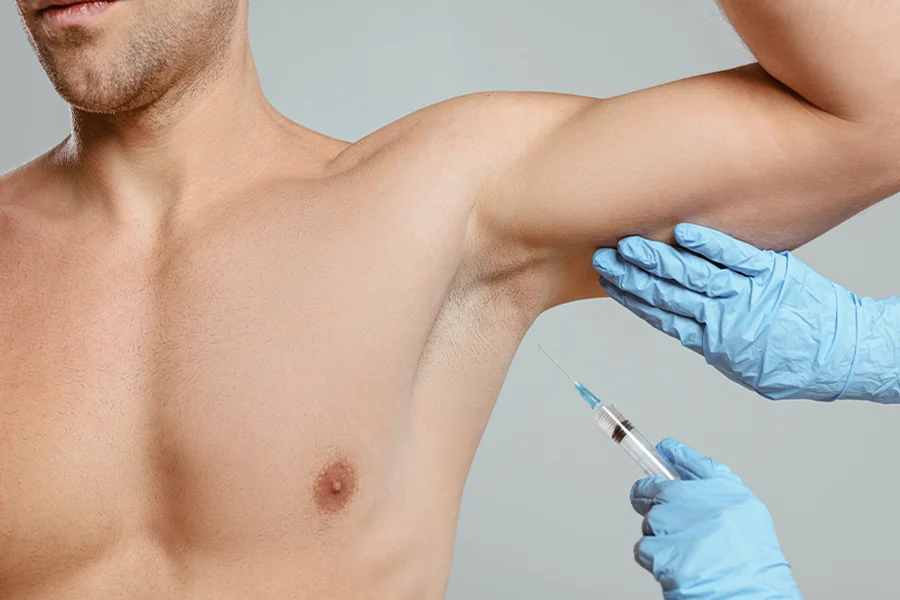
- Botulinum toxin injections (Botox, Dysport): These are injections that block the nerve signals that trigger sweat glands and can cut sweating by a large margin. Results start within days and last three to nine months, so you return for repeat treatment. The injections cause temporary discomfort and, rarely, muscle weakness near the site. Many people accept the repeat visits because the improvement can be dramatic.
- Iontophoresis: This treatment uses a mild electrical current through water to reduce palm or sole sweating. You sit with your hands or feet in trays for 20–30 minutes across several sessions. Maintenance treatments every few weeks or months keep the benefit. It’s low risk but needs commitment to the regular sessions.
- miraDry and other device treatments: miraDry uses focused energy to destroy sweat glands under the arms and give long-lasting reduction. It usually requires one or two clinic sessions and local anaesthesia. You may have swelling and bruising for a few days, but many people find the change permanent. Availability and cost vary across clinics in Singapore.
- Surgery: Surgery is a last resort for severe cases that fail other treatments. Endoscopic thoracic sympathectomy (ETS) cuts the nerve supply to sweat glands in the hands or face. It can produce strong results, but risks compensatory sweating, which means increased sweating elsewhere. Local excision of sweat glands in the armpit is another option for focal axillary hyperhidrosis, with a recovery period and possible scarring.
To choose the best hyperhidrosis treatment in Singapore for your specific case, focus on where you sweat, how much it affects your daily life, and how you handle side effects. If sweating is mild and local, topical aluminium chloride or glycopyrronium might do the job.
For palms or soles, iontophoresis is effective and avoids the need for systemic drugs. If you need strong, temporary relief, botulinum toxin injections give reliable results without long-term medication. Discuss your priorities with your doctor t help you weigh benefits, side effects and costs, and design a stepwise plan that fits your lifestyle.
As for safety, each treatment has known side effects. Topicals for example, can irritate skin, oral anticholinergics may cause dry mouth, constipation, blurred vision and difficulty with heat tolerance.
So, oral anticholinergics may not be suitable for you if you have glaucoma or urinary retention. Botox injections bring temporary injection pain and rare nearby muscle weakness.
Device treatments can cause swelling, numbness or temporary altered sensation. Surgery provides lasting change but carries surgical risks and compensatory sweating.
How to Prepare for Hyperhidrosis Assessment
To prepare for your hyperhidrosis treatment in Singapore, the first thing you will want to do is to record how the symptoms have affected you. Note when sweating starts, which activities trigger it, and how it affects your day.
Include practical details like how many times you change clothes, use of antiperspirants, and any skin infections. This helps your doctor assess the severity and choose the appropriate treatment.
You will also want to include what you have tried to manage the sweating. For this, list any previous treatments you’ve had and responses.
You can bring any creams, prescriptions or devices you’ve tried and state what worked or caused problems. While at that, note your medical history and medications.
Tell your clinician about glaucoma, urinary issues, heart disease or current drugs. Some medicines and conditions rule out oral anticholinergics or affect surgical safety.
Full disclosure keeps you safe. Wrap up your preparation by jotting down any questions you may have for your doctor.
Feel free to inquire about anything, including likely benefits, side effects, how long improvements last, and total cost. Also, ask about downtime and follow-up frequency.
Wrapping Up
If you’re considering hyperhidrosis treatment in Singapore, there are several effective options you can try. Keep in mind that no single medicine fits everyone, and the right choice depends on where you sweat, how it affects your life, and what side effects you accept. You may want to start with simple, low-risk measures and move to stronger treatments only if needed.
If you’re in Singapore and looking to reduce excessive sweating, please book a consultation to discuss hyperhidrosis treatment at our clinic and get a tailored plan that matches your needs and lifestyle. Call or visit us at;
International Center for Thoracic Surgery in Singapore | Dr. Aneez