
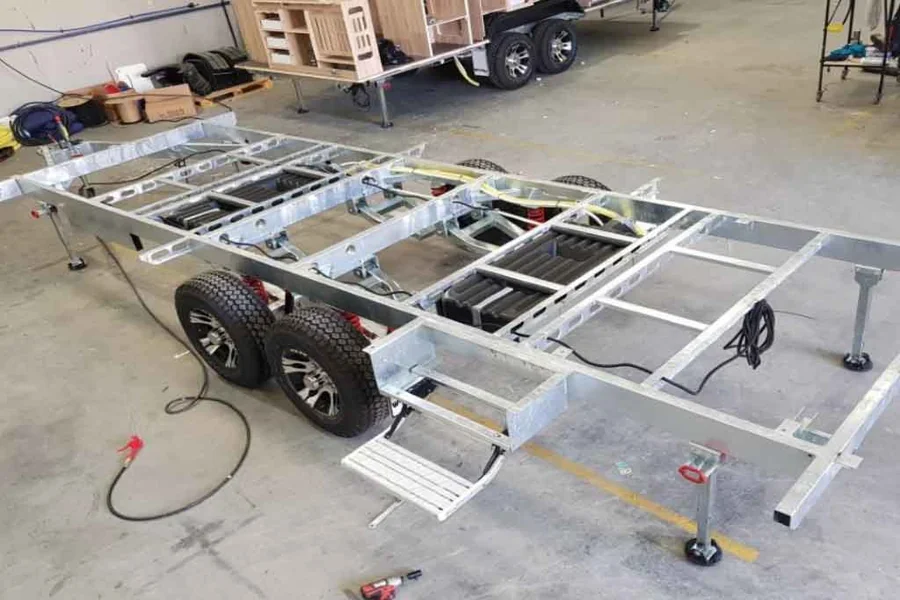
When most people think of caravans, they often imagine the cozy interiors, well-fitted kitchens, or plush sleeping areas. However, beneath the surface of every caravan lies a crucial component that determines safety, durability, and overall performance: the caravan chassis. Essentially, the chassis is the framework on which the entire caravan is built. Its design, material, and construction can significantly influence the towing experience, longevity of the caravan, and even the ease of maintenance.
What Is a Caravan Chassis?
A caravan chassis is the structural base of a caravan, much like the frame of a house or the skeleton of a body. It supports the bodywork, carries the load of interior fittings, and ensures that the caravan maintains its shape under stress, whether stationary or in motion.
Typically made from steel or aluminum, the chassis is engineered to withstand a combination of forces, including torsion (twisting), bending, and impact from road irregularities. It also plays a key role in distributing the weight of the caravan evenly across its axles, which is critical for towing stability.
In short, the chassis is not just a “base” — it’s the backbone of the caravan. Choosing the right chassis can mean the difference between a smooth, stable towing experience and one plagued with swaying, poor handling, or even structural damage over time.
Types of Caravan Chassis
Caravan chassis can vary widely depending on the manufacturer, type of caravan, and intended use. The most common types include:
1. A-Frame Chassis
The A-frame chassis is perhaps the most widely recognized design in the caravan world. It features a triangular frame at the front, resembling the letter “A,” which connects the main body of the caravan to the towing hitch.
Advantages:
- Excellent stability when towing due to its triangular geometry.
- Strong load distribution, reducing stress on the body of the caravan.
- Easier to attach towing components like jockey wheels and brakes.
Disadvantages:
- Slightly heavier than some alternative chassis designs, which can affect fuel efficiency.
- Limited flexibility for customization in some cases.
2. Ladder-Frame Chassis
As the name suggests, the ladder-frame chassis resembles a ladder with two parallel longitudinal beams connected by cross members. This design provides a solid base while allowing for some flexibility.
Advantages:
- Strong, simple, and cost-effective.
- Can support larger caravans with heavier loads.
Disadvantages:
- Less torsional rigidity compared to A-frame chassis, making them more prone to twisting under uneven loads.
- May require additional reinforcement for long caravans.
3. Modular or Multi-Section Chassis
Modern caravan manufacturers sometimes employ modular chassis designs. These consist of pre-fabricated sections that are bolted or welded together, offering adaptability for various caravan layouts.
Advantages:
- Highly customizable for different caravan sizes and interior layouts.
- Easier to repair individual sections without replacing the entire chassis.
Disadvantages:
- Can be more expensive to manufacture due to precision engineering requirements.
- Slightly more complex to inspect and maintain.
Materials Used in Caravan Chassis
The material of a caravan chassis influences not only the weight of the caravan but also its durability and resistance to corrosion. The most commonly used materials are steel and aluminum.
1. Steel
Steel is traditionally the most popular material for caravan chassis due to its strength and cost-effectiveness. It provides excellent rigidity, which helps maintain the structural integrity of the caravan over time.
Pros:
- High load-bearing capacity.
- Resistant to bending and torsion under heavy loads.
- Relatively inexpensive compared to aluminum.
Cons:
- Susceptible to rust if not properly treated.
- Heavier, which can reduce fuel efficiency during towing.
To counter rust, manufacturers often use galvanization or powder coating. Galvanized steel, for instance, has a zinc coating that prevents corrosion and extends the life of the chassis significantly.
2. Aluminum
Aluminum chassis are gaining popularity due to their light weight and natural resistance to corrosion.
Pros:
- Lighter than steel, improving fuel efficiency and towing performance.
- Naturally resistant to rust, which is especially useful in wet climates.
Cons:
- More expensive than steel.
- Can be less rigid, requiring careful design to prevent flexing or twisting.
Some modern caravans use a hybrid approach, combining steel for critical load-bearing sections with aluminum for other parts to balance strength and weight.
Key Components of a Caravan Chassis
A caravan chassis is more than just beams and supports. Several components are integral to its performance and safety:
- Cross Members: These horizontal beams provide lateral stability and distribute weight evenly across the chassis.
- Drawbar: The front extension that connects to the towing vehicle. Its design affects towing behavior and maneuverability.
- Axle Mounts: These brackets secure the axle to the chassis, playing a critical role in suspension performance.
- Brackets and Reinforcements: Additional supports to ensure heavy loads, like water tanks or appliances, do not compromise the chassis integrity.
- Attachment Points for Bodywork: Points where the caravan’s body shell is bolted or welded to the chassis. These must be precisely positioned to prevent stress and deformation.
Towing and the Importance of Chassis Design
The caravan chassis directly influences towing dynamics. A well-designed chassis ensures:
- Stability: Proper weight distribution across axles reduces swaying and makes it easier to control the caravan.
- Durability: A strong chassis withstands road vibrations, potholes, and bumps without deforming.
- Safety: Reinforced frames reduce the risk of structural failure during emergency maneuvers.
For heavier caravans, chassis design becomes even more critical. Multi-axle setups, for instance, require precise engineering to ensure all wheels share the load correctly and braking forces are evenly distributed.
Maintenance of Caravan Chassis
Even the strongest chassis requires maintenance to ensure longevity. Key practices include:
- Regular Inspection: Check for rust, cracks, or loose bolts, particularly around joints and suspension mounts.
- Rust Prevention: For steel chassis, keep protective coatings intact and touch up any damaged areas.
- Cleaning: Remove dirt, mud, and road salt, which accelerate corrosion.
- Lubrication: Ensure moving parts like suspension mounts, jockey wheels, and hitch mechanisms are lubricated.
Proper care can extend the life of a chassis well beyond the lifespan of many other caravan components.
Innovations in Caravan Chassis Design
The caravan industry has seen several innovations in chassis technology over the last decade:
- Lightweight Alloys: Using high-strength aluminum alloys reduces weight while maintaining rigidity.
- Composite Materials: Some high-end caravans employ composite beams to enhance strength and reduce corrosion.
- Integrated Suspension Systems: Modern chassis designs often incorporate independent suspension for better ride comfort.
- Modular Designs: Easier customization and repair of specific sections without replacing the entire chassis.
These innovations aim to make caravans safer, lighter, and more durable, while improving the overall towing experience.
Choosing the Right Chassis
Selecting a caravan should not be based solely on interior layout or brand reputation. The chassis is a critical factor to consider, especially if you plan to tow frequently, carry heavy loads, or travel long distances.
- For occasional towing: A basic steel ladder-frame chassis may suffice.
- For long-distance travel or heavy caravans: A reinforced A-frame or modular chassis is preferable.
- For wet climates or coastal areas: Aluminum or galvanized steel is recommended to prevent rust.
It is also wise to consult with reputable caravan chassis manufacturers Melbourne, as their expert advice and high-quality frames can ensure your caravan is both safe and durable. Working with trusted manufacturers can save time, prevent costly repairs, and provide peace of mind on every journey.
Conclusion
While it may not be the most glamorous part of a caravan, the chassis is arguably the most important. It is the foundation that supports your mobile home, ensures safety while on the road, and determines how the caravan performs under load. From material selection to design, maintenance, and innovation, the caravan chassis embodies a combination of engineering, durability, and practicality.
Whether you are a weekend traveler or a full-time caravanner, understanding your caravan chassis allows you to make informed decisions, improve safety, and enhance the longevity of your investment. After all, a caravan is only as strong as the framework beneath it — and the chassis is the heart of that framework.


