Renovating a small bathroom can feel like trying to fit a lot into a tiny box. But with the right strategies, even the most compact bathroom can feel spacious, functional, and stylish. Whether you live in a city apartment, a tiny house, or simply have a guest bathroom that needs a refresh, maximizing space without compromising on design is entirely possible. Here are some tried-and-true space-saving renovation tips that can transform your small bathroom into a big-impact oasis.
1. Rethink Layout Efficiency
The first step in a small bathroom renovation is evaluating the current layout. In many cases, bathrooms feel cramped because the fixtures aren’t positioned efficiently. Moving your toilet, sink, or shower may seem intimidating, but even slight adjustments can free up significant floor space.
- Floating vanities: Installing a wall-mounted vanity lifts the bulk off the floor, creating an airy feel and giving you room for storage underneath.
- Corner sinks and toilets: If your bathroom is particularly narrow, consider corner units. These free up walking space while still providing full functionality.
- Walk-in showers: Replacing a bathtub with a sleek walk-in shower can save several square feet, especially if you use a clear glass partition that doesn’t visually cut the room in half.
A well-thought-out layout reduces clutter, increases usability, and makes the room feel larger than it actually is.
2. Choose Light Colors and Reflective Surfaces
Color plays a powerful role in how spacious a room feels. In small bathrooms, light, neutral colors such as soft whites, creams, pastels, or pale grays can open up the space. Pairing these with reflective surfaces enhances the effect.
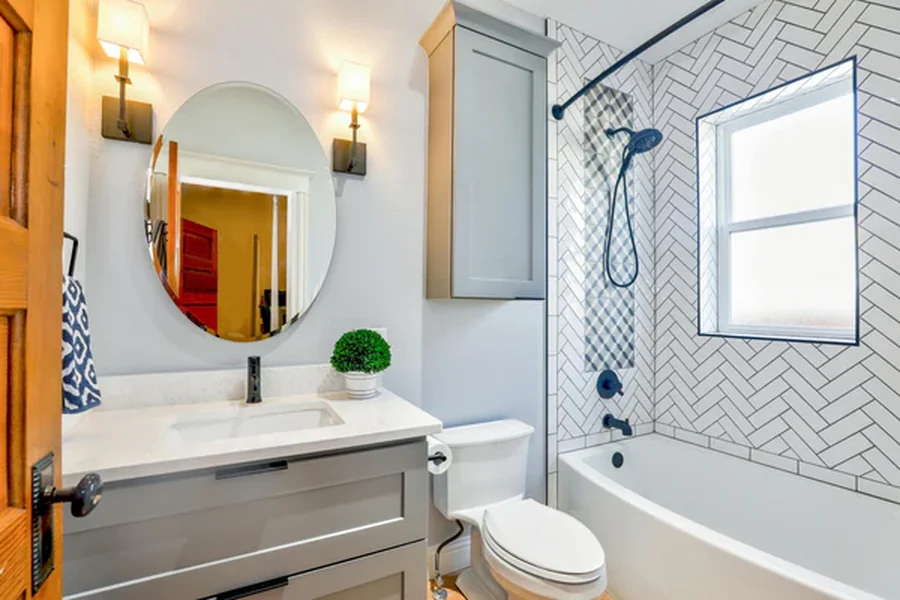
- Mirrors: A large mirror above the vanity or a mirrored cabinet can double the visual space and reflect light throughout the room.
- Glossy tiles: Gloss-finish wall or floor tiles bounce light and make the bathroom appear brighter and more open.
- Glass shower doors: Clear glass doors, instead of opaque curtains, prevent visual breaks and maintain an uninterrupted line of sight.
Even small design choices like light-colored towels or subtle metallic fixtures can contribute to the perception of more space.
3. Smart Storage Solutions
Storage is often the biggest challenge in small bathrooms. Without proper organization, clutter can quickly overwhelm a tiny space. Here’s how to maximize storage without sacrificing style:
- Over-the-toilet shelving: Make use of vertical space by installing shelves or cabinets above the toilet.
- Recessed niches: Built-in niches in the shower or above the sink provide storage without protruding into the room.
- Medicine cabinets with mirrors: These dual-purpose fixtures offer hidden storage while doubling as a mirror.
- Under-sink organizers: Use baskets, drawers, or sliding trays to keep everyday items organized in the vanity.
The goal is to keep countertops clear and items neatly stored, which instantly makes the room feel larger.
4. Opt for Compact Fixtures
In small bathrooms, the size of fixtures matters. Compact designs can dramatically improve movement and usability.
- Slim toilets: Modern slimline toilets occupy less floor space without compromising comfort.
- Narrow sinks and vanities: A 16-20 inch wide sink can be sufficient for most bathrooms, leaving room for other fixtures.
- Shower-tub combos: If you must have a bathtub, a shallow soaking tub or a combination unit can save space.
For those looking to add modern luxury without consuming too much room, installing sleek Luelue Bidets is a smart option—they provide hygiene and comfort while fitting into compact layouts.
Even small-scale fixtures, when chosen thoughtfully, can make a noticeable difference in functionality.
5. Embrace Vertical Space
When floor space is limited, vertical space becomes your best friend. Think beyond the vanity and consider walls and corners as prime real estate:
- Tall cabinets: Slim, tall cabinets provide ample storage without taking up valuable floor space.
- Hooks and racks: Wall-mounted hooks for towels or robes prevent clutter from piling up on counters.
- Floating shelves: These add storage for decorative items, plants, or toiletries without intruding on floor space.
By thinking upwards, you can effectively double your storage options without making the bathroom feel crowded.
6. Optimize Lighting
Lighting can drastically affect the perception of space. A well-lit bathroom feels more open and inviting:
- Layered lighting: Combine ambient ceiling lights with task lighting around mirrors and vanity areas.
- LED strips: Installing LED strips under floating vanities or along shelves adds depth and a modern feel.
- Natural light: If possible, maximize natural light with a window or skylight. Even a small frosted window can brighten up a tiny bathroom dramatically.
Avoid harsh overhead lights that cast shadows; soft, well-distributed lighting creates the illusion of space.
7. Minimalist Design Choices
Clutter and over-decoration can make a small bathroom feel even smaller. Adopting a minimalist approach can improve both aesthetics and functionality:
- Simple fixtures: Choose faucets, handles, and hardware with clean lines and minimal ornamentation.
- Neutral patterns: Avoid busy wallpapers or overly intricate tiles that can make the space feel chaotic.
- Hidden storage: Keep everyday items out of sight with cabinets, drawers, and baskets to maintain a clean, streamlined look.
Minimalist design emphasizes openness and reduces visual noise, making the bathroom feel larger.
8. Multi-Functional Features
Maximizing every square inch is easier when furniture and fixtures serve multiple purposes:
- Mirror cabinets: Provide both reflective surfaces and storage.
- Vanity with drawers and pull-out shelves: Combines storage with functional counter space.
- Shower benches with storage: A built-in bench in the shower can double as seating and storage.
Multi-functional elements save space and enhance the room’s overall efficiency.
9. Consider Innovative Materials
Modern materials can help create the illusion of more space while improving durability:
- Large-format tiles: Fewer grout lines create a smoother, less cluttered look.
- Glass and acrylic panels: Lightweight, reflective surfaces expand visual space.
- Light-colored stone or quartz countertops: Bright surfaces keep the room feeling airy.
These materials not only look modern but also help maintain a sleek, open aesthetic.
10. Personal Touches and Decor
Even small bathrooms benefit from personality. Thoughtful decor can make the space inviting without crowding it:
- Plants: Small potted plants or hanging greenery add life and freshness.
- Artwork: A single statement piece or framed prints can add character without overwhelming the space.
- Coordinated accessories: Matching soap dispensers, towels, and rugs can unify the design and create a sense of order.
Even minor details contribute to the overall impact of your small bathroom renovation.
A small bathroom doesn’t have to feel cramped or lack style. With careful planning, creative storage solutions, and thoughtful design choices, you can turn a tiny space into a big-impact oasis. Prioritize layout efficiency, choose light and reflective colors, maximize vertical storage, and invest in multi-functional fixtures. The right combination of these strategies not only enhances the visual appeal but also improves functionality, making your bathroom a practical and relaxing retreat.
Remember, the key to a successful small bathroom renovation is balance: keeping the space open, airy, and uncluttered while ensuring it meets all your functional needs. With these tips, even the tiniest bathroom can feel luxurious, comfortable, and surprisingly spacious.