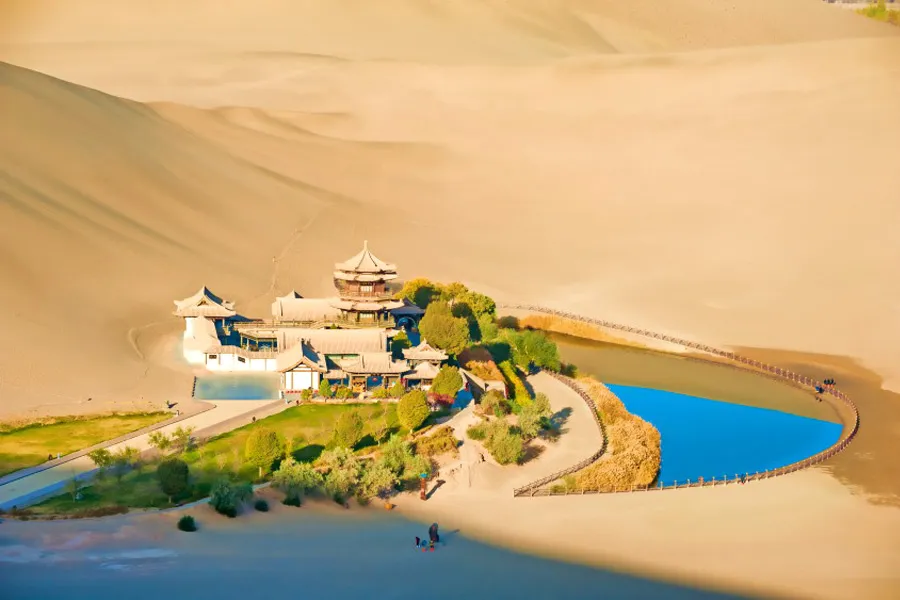
Gobi desert is listed as one of the most recognized deserts around the world. It runs through the north of China and the south of Mongolia. Most individual’s associate deserts with sand and Gobi is more than sand. It has distinctive topography, exotic fauna, and a rich history.
This paper shall discuss why the Gobi Desert is special among other deserts. You will be informed of its geography, climatic conditions, fauna, history and cultural significance.
Location and Size
The biggest desert in Asia is the Gobi desert. It has an area of approximately 1.3 million square kilometers. That renders it one of the largest deserts in the world.
It is situated between Mongolia and China. The Altai Mountains, the Mongolian grasslands and the Tibetan Plateau are the surrounding regions. It is not merely sand-endless desert. It is mainly bare rock and gravel plains, dry valleys.
Climate and Temperature
The Gobi Desert is a chilled desert. This is among its most distinctive aspects.
The Gobi has freezing winters as opposed to hot deserts like the Sahara. In January temperatures may reach down to minus 40 degrees Celsius. It may get past 40 degrees Celsius in summer. This massive disparity makes the Gobi one of the most severe spots on the Earth.
There is also a very minimal rain in the desert. Annual rainfall is less than 200 millimeters per year in most of the regions. There are seldom snow, but it may occur during winter.
Landscape and Scenery
The desert that comprises Gobi has diverse landscapes. It is not just sand dunes. Actually, the Gobi consists of sand only around 5 percent.
There will be mountains, cliffs, rocky outcrops and grasslands. Dry riverbeds also exist that only run water on rare rainstorms. The desolate terrain and spaced vegetation form dramatic scene.
One of the best-known places is the Flaming Cliffs in Mongolia. And they are red with sunset, Abounding with fossils of dinosaurs.
Rich History
The Gobi desert is closely connected with history. It belonged to an ancient Silk Road. Merchants moved along it with silk, spices and other merchandise.
There are numerous ancient cities and ruins around the Gobi. The nomadic tribes that moved with herds were also found in the desert.
Genghis Khan is one of the most renowned historical personalities associated with the Gobi. His empire emerged out of Mongolia and spread to Asia and Europe.
Dinosaur Fossils
The Gobi Desert is a gem to paleontologists. A lot of dinosaur remains have been discovered here.
The first dinosaur eggs were found in the Gobi by an American explorer Roy Chapman Andrews in the 1920s. Since that time, numerous species have been discovered. These are Velociraptor and Protoceratops.
Due to such findings, the desert is commonly referred to as a dinosaur graveyard. This renders it as one of the most significant fossil locations in the world.
Wildlife and Plants
The Gobi Desert is alive despite its adverse climate.
Animals like the Bactrian camel, Gobi bear, snow leopard, and wild ass live here. One of the world rarest bears is the Gobi bear or Mazaalai. Only a few dozen remain.
The desert has plants like saxaul trees and hardy shrubs. Such plants can survive on minimal water. They play a role in preventing soil erosion and animal food.
Nomadic Culture
Gobi people live a special life. A lot of Mongolian families are nomads. They reside in the old fashioned tents known as gers or yurts.
They keep camels, goats and sheep. The importance of camels is that they can live without much water and transport heavy loads.
The nomads are adherents of centuries old traditions. Their culture includes music, storytelling, and horse riding.
Unique Weather Events
Gobi Desert is characterized by the sudden dust storms. These hurricanes may extend to large distances and obscure the sun.
In other areas, the land is moulded into weird shapes by strong winds. Rocks, cliffs, and dunes change over time because of the wind.
The desert is also good in stargazing due to its elevation and open skies. The nights are clear and silent with thousands of stars.
Economic Importance
The Gobi desert is not a desert of nothingness. It possesses numerous natural resources.
Mongolia and China mine coal, copper, and gold in the Gobi. These resources are money makers, yet they pose environmental difficulties.
Tourism is also growing. Tourists visit the scenery, fossils and the distinctive culture.
Why the Gobi Desert Is Unique
The Gobi Desert stands out from other deserts because:
- It is a cold desert with extreme temperature changes
- It has dinosaur fossils and rich history
- It is home to rare animals like the Gobi bear
- It has both rocky landscapes and grasslands
- It is tied to the Silk Road and nomadic culture
These features make the Gobi not just a desert but a land full of life, history, and wonder.
Conclusion
Gobi Desert is among the most outstanding deserts in the world. It is not only sand and emptiness. It is very hot, has exotic wildlife, ancient history, and a nomadic culture that is still alive.
The Gobi Desert is evidence of the beauty and strength of nature through the fossils of dinosaurs and stunning scenery. It is where history, science and culture come together.
FAQs
Where is the Gobi Desert located?
The Gobi Desert is located in northern China and southern Mongolia.
Why is the Gobi Desert unique?
It is unique because it is a cold desert, has dinosaur fossils, rare wildlife, and a deep cultural history.
What animals live in the Gobi Desert?
Animals include Bactrian camels, snow leopards, Gobi bears, wild asses, and gazelles.
Is the Gobi Desert all sand?
No. Only about 5% of the Gobi Desert is sand. The rest is rocky land, grasslands, and dry valleys.
What is the weather like in the Gobi Desert?
It has extreme weather. Summers can reach 40°C while winters can drop to –40°C.
Why is the Gobi important in history?
It was part of the Silk Road trade route and home to ancient tribes and empires.
Are there still nomads in the Gobi Desert?
Yes. Many Mongolian families still live as nomads, moving with their herds.
What fossils were found in the Gobi Desert?
Fossils of dinosaurs like Velociraptor and the first dinosaur eggs were discovered here.
What plants grow in the Gobi Desert?
Plants such as saxaul trees and desert shrubs grow in the Gobi.
Can tourists visit the Gobi Desert?
Yes. Tourists can explore the landscapes, see fossils, and experience nomadic culture.