In the rapidly changing environment of contemporary business life, even the latest technologies are not considered a luxury, or a competitive advantage anymore–they are a mere necessity. They have taken the lead in revolutionizing the way things are done in the industries making it more readily possible, and streamlining them in the process in ways that we have not envisioned. As the currents of the 21 st century flow, more companies are embracing the latest technological advances as a means of sustaining their competitiveness, the customer experience, and even to some extent the push and pull of industry challenges.
In this article, we will discover how current technologies like artificial intelligence (AI), blockchain, quantum computing and how these emerging technologies will help transform the world of business in the coming years in 2025 and beyond.
The Rise of Artificial Intelligence in Business
Artificial Intelligence is no longer a futuristic concept; it is a reality that is transforming the way businesses operate. From customer service automation to predictive analytics, AI is enabling businesses to make smarter decisions faster and more efficiently.
One of the key applications of AI in business is machine learning, a subset of AI that allows systems to learn from data and improve over time without human intervention. Machine learning models are being used in various industries for fraud detection, marketing optimization, demand forecasting, and more.
Moreover, chatbots and virtual assistants powered by AI are providing 24/7 customer service, improving the customer experience, and driving operational efficiency. As AI becomes more sophisticated, it will continue to drive innovation across various sectors, from healthcare to finance to retail.
Blockchain: A Secure, Transparent Future
Blockchain technology, often associated with cryptocurrencies like Bitcoin, is gaining traction in business due to its ability to provide secure, transparent, and immutable data transactions. It allows businesses to create decentralized databases that can be accessed by multiple parties in a way that is both secure and transparent.
The potential of blockchain goes far beyond cryptocurrencies. For example, businesses in the supply chain industry are leveraging blockchain to track the origin and movement of goods, ensuring the integrity of data and reducing fraud. Blockchain is also being adopted in smart contracts, which automatically execute transactions once certain conditions are met, eliminating the need for intermediaries and reducing operational costs.
In the coming years, blockchain technology is expected to play a significant role in enhancing data security, privacy, and transaction efficiency, making it an indispensable tool for businesses looking to stay ahead.
Quantum Computing: Unleashing Unprecedented Processing Power
Quantum computing is still in its infancy, but its potential is immense. Unlike classical computers that process information in binary (0s and 1s), quantum computers use quantum bits, or qubits, that can exist in multiple states simultaneously, allowing them to perform calculations much faster than traditional computers.
This quantum leap in computing power is expected to have a transformative impact on business operations. For instance, quantum computers can solve complex problems in chemistry, pharmaceuticals, and materials science that are currently impossible for classical computers to solve. Businesses in these industries are already exploring how quantum computing can speed up drug discovery, new materials development, and even cryptography.
Although commercial quantum computers are still a long way from becoming mainstream, quantum computing holds the potential to revolutionize industries that rely on big data analysis, optimization, and modeling, providing businesses with new tools to solve their most challenging problems.
The Internet of Things (IoT): Connecting the World Around Us
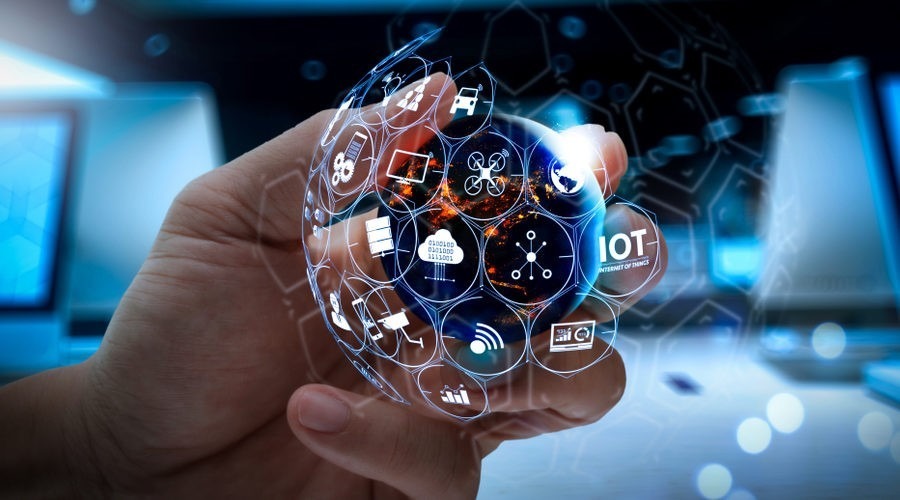
The Internet of Things (IoT) refers to the interconnected network of physical devices—ranging from smart appliances to wearables to industrial machines—that collect and share data through the internet. As IoT devices become more sophisticated, they are playing an increasingly important role in the business world.
IoT technology enables businesses to track assets, optimize supply chains, and enhance customer experiences by collecting real-time data from connected devices. For instance, in the manufacturing industry, IoT sensors can monitor equipment performance, predict maintenance needs, and minimize downtime, leading to significant cost savings and improved productivity.
In the retail sector, IoT devices can enhance the customer shopping experience by offering personalized recommendations based on real-time data collected from consumers’ interactions with in-store displays or apps. Additionally, IoT devices are also critical in smart cities, where they enable better management of traffic flow, public services, and energy consumption.
As IoT adoption increases, businesses will benefit from more streamlined operations, better decision-making, and enhanced customer satisfaction.
5G Technology: The Backbone of Future Business Innovation
5G, the fifth-generation wireless technology, is set to change the way businesses operate by providing faster speeds, lower latency, and more reliable connections. With 5G, businesses can unlock new possibilities for real-time communication, cloud computing, and remote work.
The impact of 5G will be felt across various industries, including healthcare, logistics, and entertainment. In healthcare, for example, 5G will enable remote surgeries and real-time monitoring of patients’ vital signs through connected devices. In logistics, it will facilitate the seamless tracking of goods in transit, improving delivery times and reducing costs.
Moreover, 5G technology will play a pivotal role in enhancing augmented reality (AR) and virtual reality (VR) experiences, enabling businesses to offer immersive experiences for their customers. This will be particularly important in sectors like real estate, retail, and gaming, where businesses can create new ways for customers to interact with their products and services.
The Future of Business in the Age of Emerging Technologies
With the ongoing changes to the business world brought about by emerging technology, the businesses that optimally implement these technologies in their operations will beat their competition by far. The following years will witness the mass use of AI, blockchain, quantum computers, IoT, and 5G, and the business tied with their use would lag behind.
Businesses need to focus on the adoption of technology, use of data in making business decisions and being innovative on a continuous basis so as to remain competitive. Finding the best ways to use the emerging technologies- whether it is automation of tasks using AI, enhancing data security using blockchain or using quantum computing to solve difficult problems- will place businesses in a strong position to thrive in the long term.
In an ever evolving digital era, it is just evident that the future of business comes along hand in hand with the development in the digital world. The companies that adopt this change will be the one that will take the ticket to the future and establish new standards of efficiency, customer experience, and innovation.